

The landscape of dentistry is changing, particularly with artificial intelligence offering practitioners advanced tools for diagnosing, planning, and communicating with their patients.
Dr. Paola, a dental surgeon, shares her experience of how Allisone not only strengthened her analysis processes, but also increased patient adherence to proposed treatments by making their oral health issues easier to understand.
Patient awareness of dental infections
During our conversation, Dr. Paola presented us with a clinical case that is particularly representative of the impact ofAllisone her daily practice. A loyal patient who had been under her care for many years complained of slight dental discomfort, but nothing noticeable appeared at first glance. During a routine consultation, Allisone an underlying problem that had previously been invisible without a panoramic X-ray: an apical infection around a bridge on a devitalized molar.
When examining panoramic X-rays via Allisone, the software detected an abnormality at the tips of the tooth roots supporting the bridge. An image characteristic of an apical granuloma appeared, annotated in red with a confidence score of 98%. "We have very precise information that allows us to highlight the problems they have in their mouths in color. So it's something that will speak to them more," emphasizes the practitioner.
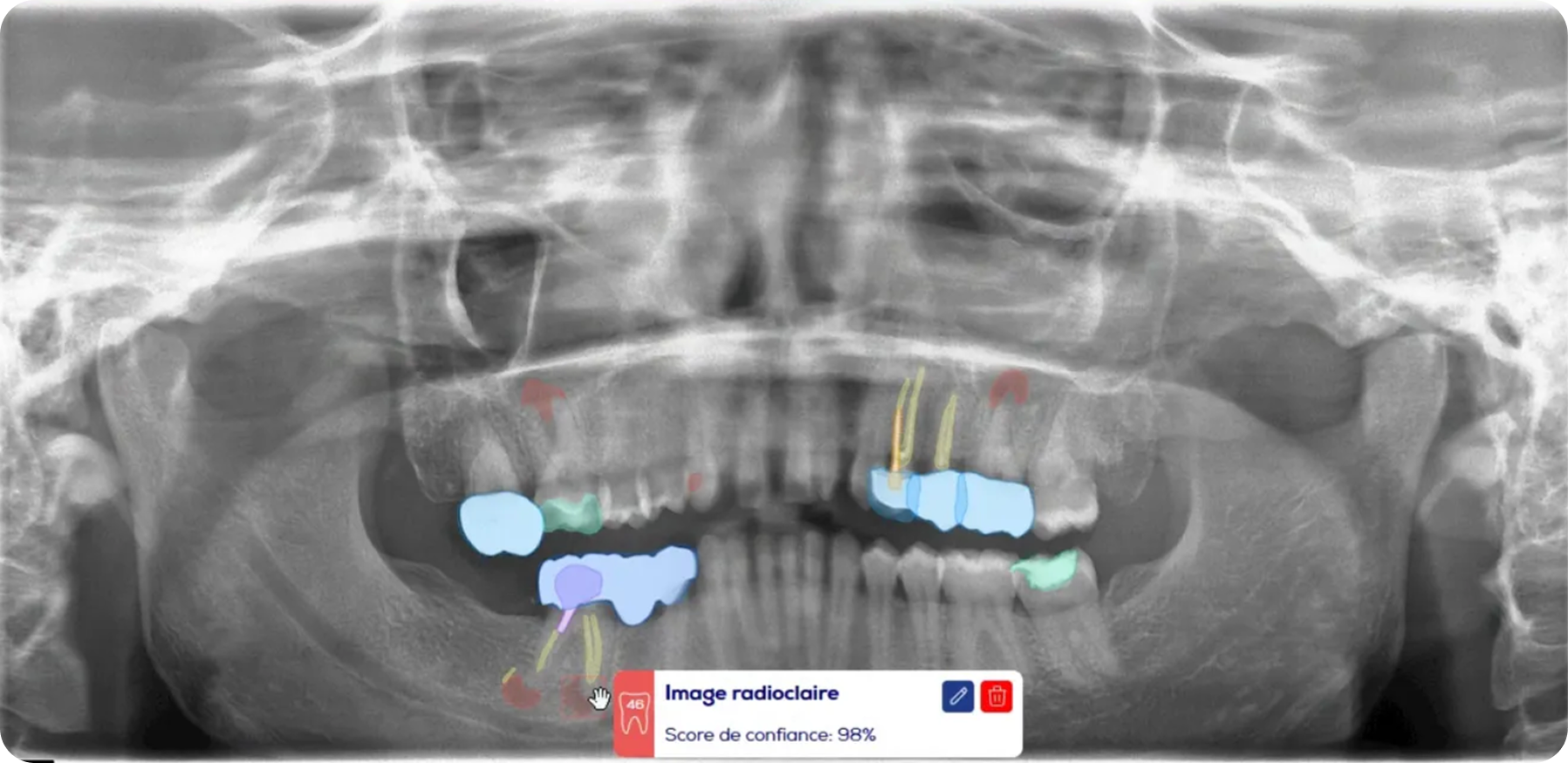
For the patient, these colored annotations were a real trigger."When they see red, patients stop immediately and ask themselves, 'What's going on? Red means there's a problem. And the confidence score reinforces the credibility of what we show the patient,"she explains. This direct visualization allowed the patient to understand that the infection, although silent at the moment, was likely to spread and affect the nearby mandibular nerve.
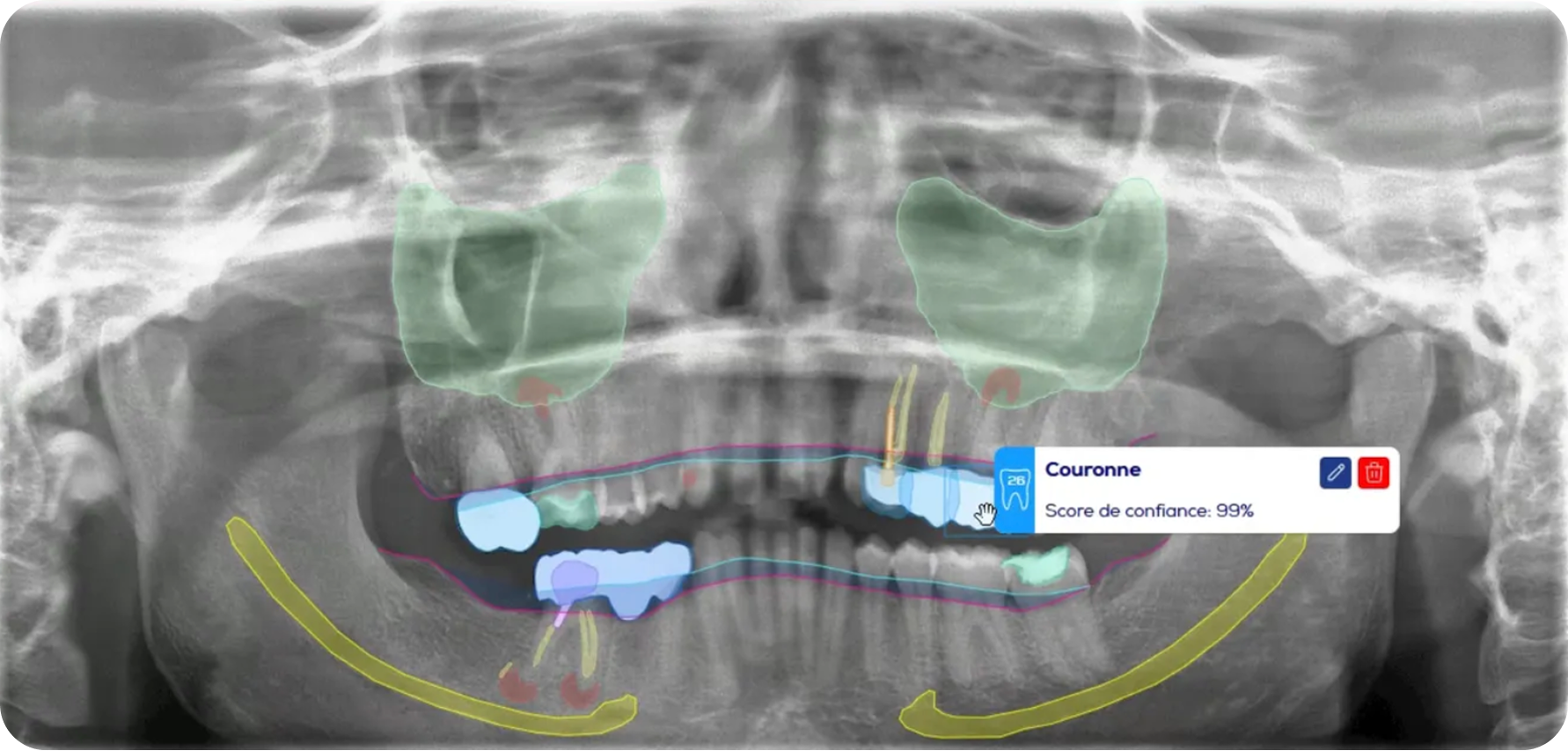
Dr. Paola took the time to explain the situation in detail to her patient, using several tools integrated into Allisone, such as highlighting the infected areas or displaying the surrounding anatomical structures, such as the mandibular nerve, to reinforce understanding of the risks.
These explanations helped the patient better understand the medical issues and accept the idea that surgery was necessary. "Showing rather than telling is what makes all the difference," adds the dental surgeon.
Once the diagnosis was made, the practitioner was able to plan Allisone stage of the treatment in detail and collaboratively on Allisone , actively involving the patient in the decision-making process. Here is a summary of the proposed steps:
- Extraction of the infected tooth: to remove the granuloma and prevent damage to neighboring structures.
- Performing a scan: to assess the quality of the alveolar bone and determine whether a bone graft would be necessary before placing an implant.
- Implant placement: after healing, an implant would be placed to restore the function and aesthetics of the patient's teeth.
By viewing these steps directly on the software, the patient was able to see exactly where each procedure would take place. Dr. Paola also used annotation tools to show the exact location where an implant would be placed and to explain the impact of bone grafting if it proved necessary. "Being able to visualize the treatment directly on the X-ray is a huge advantage, both for me and for them,"she says.
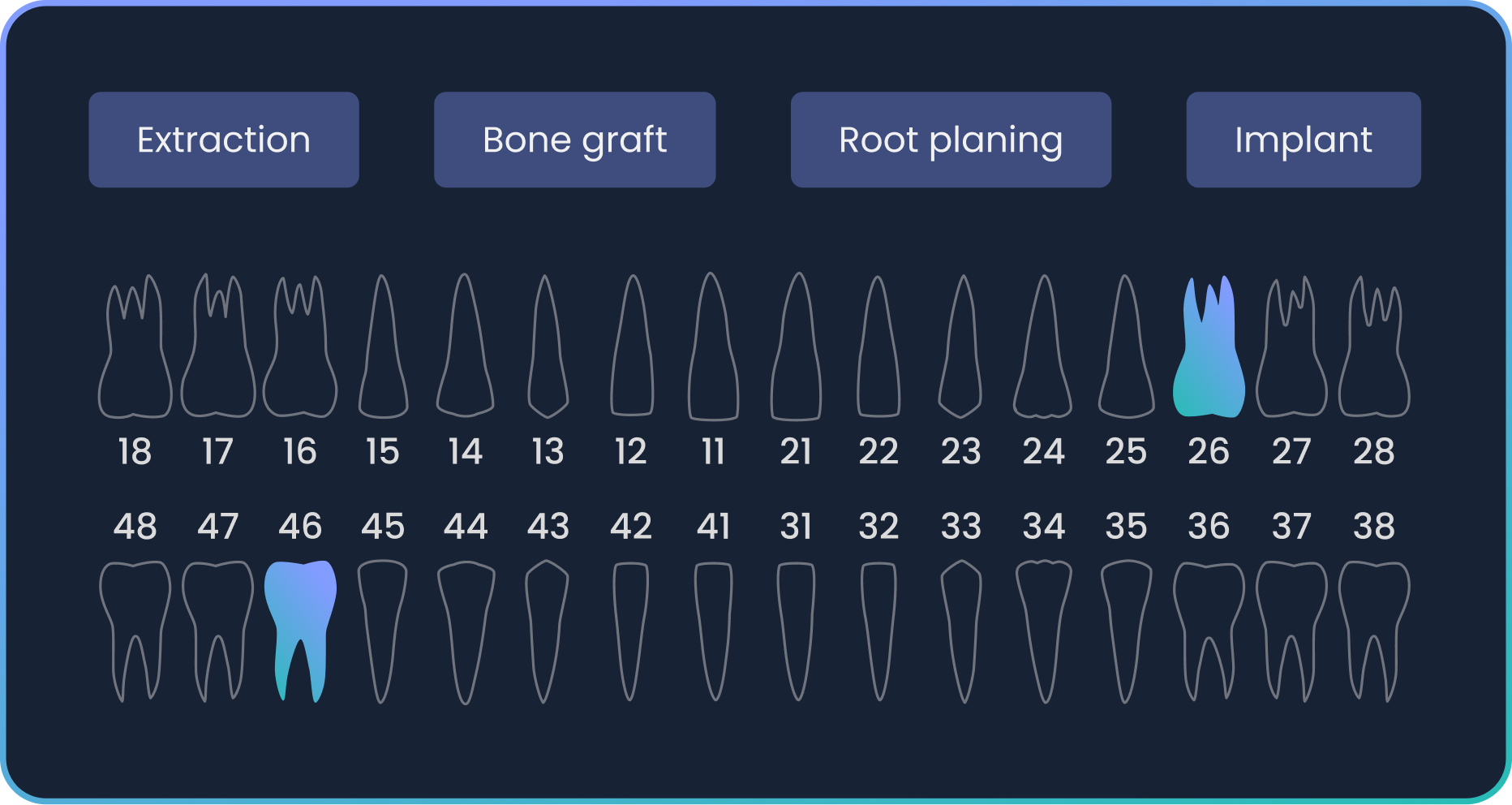
For this patient, the process was particularly reassuring. Seeing the step-by-step treatment plan, with clear explanations and educational sheets about the various procedures, alleviated many of her concerns. She said she felt more confident and better informed about what the different stages would involve. It also allowed the dental surgeon to address potential technical challenges, such as the proximity of the implant root to sensitive structures.
In addition to planning, Dr. Paola usedAllisone reporting featureAllisone send the patient a clear and detailed summary by email. "This is very useful for complicated cases, as it allows patients to review the information at home and ask fewer questions later," she explains.
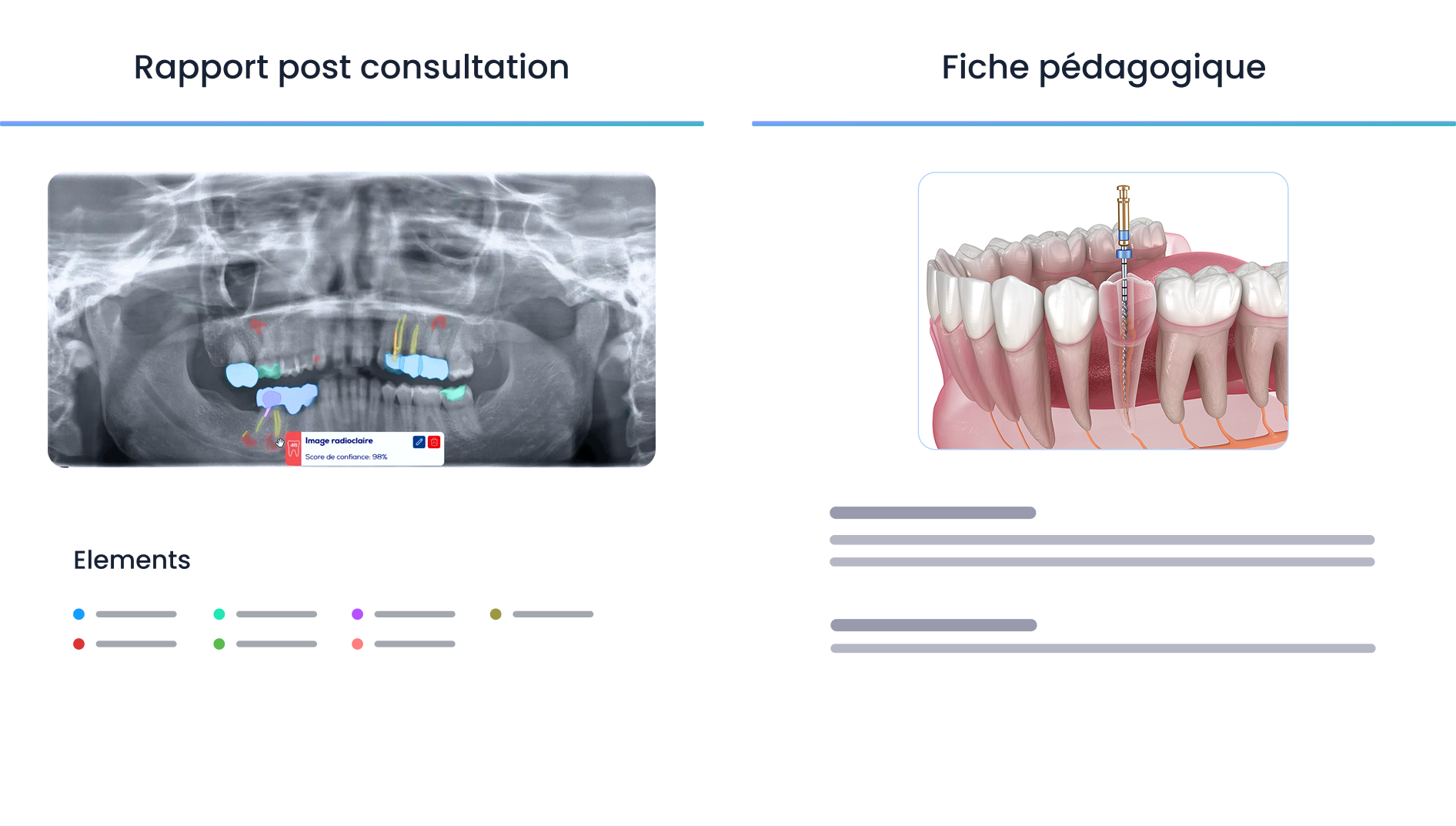
Thanks to its educational tools, Allisone the consultation experience by making care more understandable and accessible. For this patient, it was very revealing: although she has not yet undergone the entire treatment for financial reasons, she is now aware of the risks and benefits of the proposed procedures. "Once patients understand their oral health condition, they are more committed to their care,"concludes Dr. Paola.
Related articles
All the latest news on the future of dentistry
Artificial intelligence at the heart of dental care: testimony from Dr. Paola
Making treatment plans more acceptable: 4 strategies that really work


