Patient Experience
4 minutes

How does technology strengthen patient trust?

Published on
May 26, 2025
Receive all the latest news

All the latest news on the future of dentistry, delivered straight to your inbox.

Thank you! Your submission has been received!
Oops! Something went wrong while submitting the form.

Patients' trust in their practitioners is based on clear communication and mutual understanding. However, in the digital age, this relationship is being put to the test. Easy access to medical information on the Internet influences the behavior of patients, who seek to validate or question diagnoses. In addition, technological advances are transforming the way care is delivered, raising questions about the objectivity and impartiality of medical recommendations.

Far from aggravating this situation, technology is proving to be a powerful lever for restoring trust. Digital tools and artificial intelligence make it possible to improve the transparency of diagnoses, visually explain pathologies, and enhance the security of medical exchanges. In several fields, particularly dentistry, these innovations have already demonstrated their ability to make patients more confident and involved in their care. In this article, we will therefore explore how technological advances are helping to establish a more fluid dialogue and secure the patient-practitioner relationship.

Patients' lack of understanding: a barrier to trust

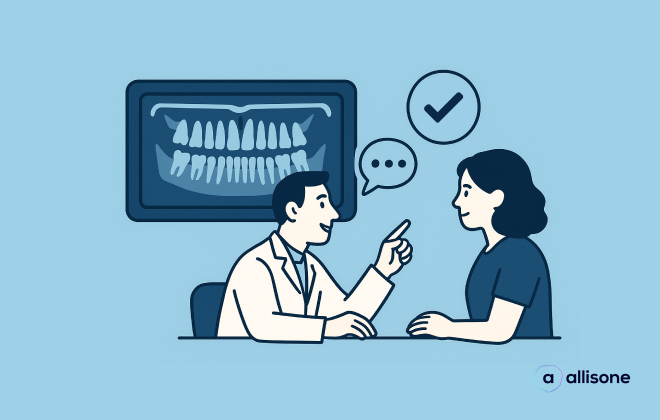
Understanding the diagnosis and treatment is a key factor in patients' acceptance of care. However, our study reveals that 67% of patients are unable to identify a condition on their dental X-ray, and 42% leave feeling that they have not been clearly informed—not because of a lack of explanation, but because the information seemed vague or difficult to understand. This difficulty is amplified by the absence of pain in certain conditions, which can lead patients to doubt the necessity of the proposed treatment.

The practitioner's expertise can sometimes seem abstract to the patient, especially when the conditions are neither painful nor visible to the naked eye. However, reading an X-ray, which is often technical, remains difficult to understand—which can hinder the perception of the clinical situation.

The expertise of healthcare professionals is not always apparent or fully understood by patients, who may not necessarily be aware of their problems until they become clinically visible, let alone when reading an X-ray.

In fact, most patients struggle to interpret these images, which can lead to misunderstanding and sometimes mistrust of medical recommendations. 70% of patients believe that a color code would help them better understand their X-rays, illustrating the need to make information more accessible.

To meet this need, digital technologies offer tools that improve patient understanding:

  • Interactive visualization: software such as Allisone radiologists to annotate and explain X-rays directly on screen, making pathologies easier to understand.
  • Modeling and projection of treatment plans: by visually projecting the different stages of treatment using diagrams or 3D models, patients can better visualize the care they will receive and its concrete impact.

More generally, patients tend to seek information online before or after a consultation. Although this access to information is a lever for empowerment, it can also generate anxiety and erroneous preconceptions. Some patients arrive at their appointments with diagnoses they have come up with on their own, sometimes making it more difficult for practitioners to deconstruct these beliefs and re-explain the clinical situation objectively.

Clear and informative communication is essential for establishing a relationship of trust between patient and practitioner. A well-informed patient is more likely to adhere to medical recommendations and follow their treatment. According to a study by the Haute Autorité de Santé (HAS), the quality and safety of care are directly linked to the patient's involvement in their care pathway.

By making medical information more accessible and visual, these innovations help to increase transparency and trust. They also reposition the practitioner as a true companion to the patient throughout their care journey.

Artificial intelligence as a neutral and transparent second opinion

In healthcare, trust is largely based on transparency in diagnosis and treatment. However, some patients fear possible overtreatment, particularly when the recommended care concerns conditions that are not yet painful. In response to these concerns, artificial intelligence (AI) appears to be a key tool for restoring trust by providing objective analysis free from financial bias.

Indeed, AI has no economic interest in prescribing unnecessary procedures. It only analyzes medical and radiological data according to rigorous scientific criteria validated by healthcare professionals. This approach reduces subjectivity and enhances the credibility of medical recommendations, particularly in disciplines where understanding the diagnosis can be complex, such as dentistry or radiology.

Allisone a good example of this contribution: by analyzing dental X-rays, AI highlights pathologies in a visual and educational way, allowing patients to see what the practitioner is diagnosing. Patient adherence to treatment plans increased by an average of 24% with the useAllisone.

One of the major advantages of artificial intelligence is its ability to act as a second medical opinion, neutral and free from commercial pressure. Many patients want to validate a diagnosis before agreeing to treatment: AI meets this need by providing an additional analysis that is perceived as impartial and reassuring.

Beyond diagnostic validation, artificial intelligence also plays a key role in patient education. By implementing interactive interfaces, it enables:

  • Facilitate understanding of diagnoses with annotations and visual explanations integrated directly into medical images.
  • Avoid misunderstandings and refusals of treatment by objectively demonstrating the necessity of the proposed care.
  • Reduce patient anxiety by providing them with factual and visual information that helps them better understand their health condition.

Thanks to these advances, technology is helping to increase transparency and patient trust in their caregivers, while improving treatment adherence.

Create the conditions for a smoother and more secure care relationship

The development of digital technologies in healthcare is not limited to diagnostic assistance. It is profoundly changing the healthcare experience by improving the clarity of treatment pathways, data traceability, and transparency of exchanges. These factors are crucial to strengthening patient confidence throughout their care.

Faced with the increasing complexity of care pathways, technology allows healthcare professionals to refocus their attention on what matters most: communicating with patients. These tools are designed to support dialogue, not replace it.

The automation of certain repetitive tasks and the centralization of clinical data allow practitioners to devote more time to education during consultations.

Platforms such as Allisone time—including time spent creating radiology reports or post-consultation reports that can be sent to patients—avoiding any technical friction or loss of information when explaining the treatment plan. This increased fluidity helps make care more transparent and understandable from the patient's perspective.

More than just logistical support, these technologies contribute to a more profound transformation of the care relationship. They enable a form of enhanced therapeutic alliance, where patients have access to clear, contextualized information tailored to their level of understanding.

The report by the Haute Autorité de Santé (French National Authority for Health) points out that the quality and safety of care depend on effective cooperation between patients and professionals. This cooperation requires not only availability, but also clear, secure, and accessible support. In this sense, digital tools are facilitators, but they must be integrated into a comprehensive approach that remains deeply human.

Digital technologies are redefining the way patients experience their healthcare journey. They do not replace human interaction, but offer new forms of support that are more tangible, more visual, and more explicit. By making clinical issues more visible and clarifying medical decisions, they strengthen the relationship of trust and support the therapeutic relationship, without replacing it.

What patients expect today is not just treatment, but a shared understanding of their health status and transparent collaboration with their practitioner. By meeting these expectations, technology paves the way for a more fluid, equitable, and engaging therapeutic relationship.

For healthcare professionals, these tools are not gadgets, but levers that enable them to practice with greater peace of mind, making their expertise more understandable and accessible. It is in this alliance—between clinical precision, digital education, and mutual commitment—that the trust of today and tomorrow is at stake.

Blog

Related articles

Lorem ipsum dolor sit amet, consectetur adipiscing elit.

Not yet anAllisone userAllisone

Request a demo

How does technology strengthen patient trust?

Published on
May 26, 2025

Patients' trust in their practitioners is based on clear communication and mutual understanding. However, in the digital age, this relationship is being put to the test. Easy access to medical information on the Internet influences the behavior of patients, who seek to validate or question diagnoses. In addition, technological advances are transforming the way care is delivered, raising questions about the objectivity and impartiality of medical recommendations.

Far from aggravating this situation, technology is proving to be a powerful lever for restoring trust. Digital tools and artificial intelligence make it possible to improve the transparency of diagnoses, visually explain pathologies, and enhance the security of medical exchanges. In several fields, particularly dentistry, these innovations have already demonstrated their ability to make patients more confident and involved in their care. In this article, we will therefore explore how technological advances are helping to establish a more fluid dialogue and secure the patient-practitioner relationship.

Patients' lack of understanding: a barrier to trust

Understanding the diagnosis and treatment is a key factor in patients' acceptance of care. However, our study reveals that 67% of patients are unable to identify a condition on their dental X-ray, and 42% leave feeling that they have not been clearly informed—not because of a lack of explanation, but because the information seemed vague or difficult to understand. This difficulty is amplified by the absence of pain in certain conditions, which can lead patients to doubt the necessity of the proposed treatment.

The practitioner's expertise can sometimes seem abstract to the patient, especially when the conditions are neither painful nor visible to the naked eye. However, reading an X-ray, which is often technical, remains difficult to understand—which can hinder the perception of the clinical situation.

The expertise of healthcare professionals is not always apparent or fully understood by patients, who may not necessarily be aware of their problems until they become clinically visible, let alone when reading an X-ray.

In fact, most patients struggle to interpret these images, which can lead to misunderstanding and sometimes mistrust of medical recommendations. 70% of patients believe that a color code would help them better understand their X-rays, illustrating the need to make information more accessible.

To meet this need, digital technologies offer tools that improve patient understanding:

  • Interactive visualization: software such as Allisone radiologists to annotate and explain X-rays directly on screen, making pathologies easier to understand.
  • Modeling and projection of treatment plans: by visually projecting the different stages of treatment using diagrams or 3D models, patients can better visualize the care they will receive and its concrete impact.

More generally, patients tend to seek information online before or after a consultation. Although this access to information is a lever for empowerment, it can also generate anxiety and erroneous preconceptions. Some patients arrive at their appointments with diagnoses they have come up with on their own, sometimes making it more difficult for practitioners to deconstruct these beliefs and re-explain the clinical situation objectively.

Clear and informative communication is essential for establishing a relationship of trust between patient and practitioner. A well-informed patient is more likely to adhere to medical recommendations and follow their treatment. According to a study by the Haute Autorité de Santé (HAS), the quality and safety of care are directly linked to the patient's involvement in their care pathway.

By making medical information more accessible and visual, these innovations help to increase transparency and trust. They also reposition the practitioner as a true companion to the patient throughout their care journey.

Artificial intelligence as a neutral and transparent second opinion

In healthcare, trust is largely based on transparency in diagnosis and treatment. However, some patients fear possible overtreatment, particularly when the recommended care concerns conditions that are not yet painful. In response to these concerns, artificial intelligence (AI) appears to be a key tool for restoring trust by providing objective analysis free from financial bias.

Indeed, AI has no economic interest in prescribing unnecessary procedures. It only analyzes medical and radiological data according to rigorous scientific criteria validated by healthcare professionals. This approach reduces subjectivity and enhances the credibility of medical recommendations, particularly in disciplines where understanding the diagnosis can be complex, such as dentistry or radiology.

Allisone a good example of this contribution: by analyzing dental X-rays, AI highlights pathologies in a visual and educational way, allowing patients to see what the practitioner is diagnosing. Patient adherence to treatment plans increased by an average of 24% with the useAllisone.

One of the major advantages of artificial intelligence is its ability to act as a second medical opinion, neutral and free from commercial pressure. Many patients want to validate a diagnosis before agreeing to treatment: AI meets this need by providing an additional analysis that is perceived as impartial and reassuring.

Beyond diagnostic validation, artificial intelligence also plays a key role in patient education. By implementing interactive interfaces, it enables:

  • Facilitate understanding of diagnoses with annotations and visual explanations integrated directly into medical images.
  • Avoid misunderstandings and refusals of treatment by objectively demonstrating the necessity of the proposed care.
  • Reduce patient anxiety by providing them with factual and visual information that helps them better understand their health condition.

Thanks to these advances, technology is helping to increase transparency and patient trust in their caregivers, while improving treatment adherence.

Create the conditions for a smoother and more secure care relationship

The development of digital technologies in healthcare is not limited to diagnostic assistance. It is profoundly changing the healthcare experience by improving the clarity of treatment pathways, data traceability, and transparency of exchanges. These factors are crucial to strengthening patient confidence throughout their care.

Faced with the increasing complexity of care pathways, technology allows healthcare professionals to refocus their attention on what matters most: communicating with patients. These tools are designed to support dialogue, not replace it.

The automation of certain repetitive tasks and the centralization of clinical data allow practitioners to devote more time to education during consultations.

Platforms such as Allisone time—including time spent creating radiology reports or post-consultation reports that can be sent to patients—avoiding any technical friction or loss of information when explaining the treatment plan. This increased fluidity helps make care more transparent and understandable from the patient's perspective.

More than just logistical support, these technologies contribute to a more profound transformation of the care relationship. They enable a form of enhanced therapeutic alliance, where patients have access to clear, contextualized information tailored to their level of understanding.

The report by the Haute Autorité de Santé (French National Authority for Health) points out that the quality and safety of care depend on effective cooperation between patients and professionals. This cooperation requires not only availability, but also clear, secure, and accessible support. In this sense, digital tools are facilitators, but they must be integrated into a comprehensive approach that remains deeply human.

Digital technologies are redefining the way patients experience their healthcare journey. They do not replace human interaction, but offer new forms of support that are more tangible, more visual, and more explicit. By making clinical issues more visible and clarifying medical decisions, they strengthen the relationship of trust and support the therapeutic relationship, without replacing it.

What patients expect today is not just treatment, but a shared understanding of their health status and transparent collaboration with their practitioner. By meeting these expectations, technology paves the way for a more fluid, equitable, and engaging therapeutic relationship.

For healthcare professionals, these tools are not gadgets, but levers that enable them to practice with greater peace of mind, making their expertise more understandable and accessible. It is in this alliance—between clinical precision, digital education, and mutual commitment—that the trust of today and tomorrow is at stake.

Get the latest updates from Allisone your inbox.

Get the latest updates from Allisone your inbox.

Our best news, once a month.
Guaranteed spam-free and full of good advice!

Allisoneas the data controller, processes the personal data collected in this form in order to process your request. For more information, please consult our privacy policy
Thank you! Your submission has been received!
Oops! Something went wrong while submitting the form.

Not yet anAllisone userAllisone

Find out what Allisone can do for you

DISCOVER ALLISONE